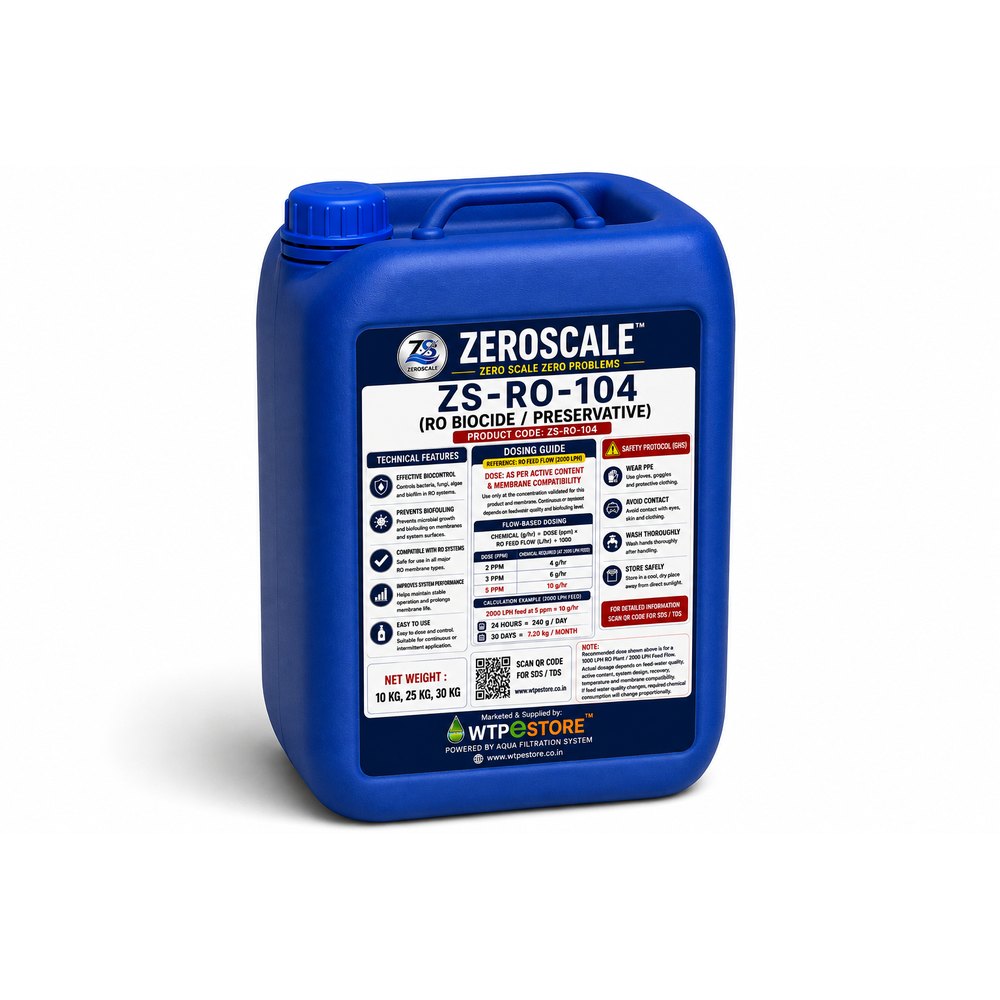
A non-oxidising biocide for two jobs: keeping bacterial growth off membranes during normal running, and preserving them safely when a plant is shut down for weeks or months.
An RO membrane is an ideal home for bacteria. It is warm, permanently wet, and the feed water delivers a steady supply of nutrients. Once a colony establishes on the surface, it secretes a slime layer that protects it — and that layer is what drives differential pressure up and flow down.
The problem gets worse during idle periods. A plant that runs continuously has flow constantly sweeping the membrane surface. A plant that sits idle over a weekend, a shutdown or a seasonal break has stagnant water sitting in the pressure vessels — and bacterial counts can climb dramatically in a matter of days.
Membranes taken out of service and left wet without preservation are frequently found ruined when the plant restarts: heavily fouled, biologically contaminated, and sometimes beyond recovery by cleaning.
This is a non-oxidising biocide, which matters — oxidising chemicals like chlorine destroy thin-film composite membranes:
Use it two ways: as a periodic shock dose during running to keep counts down, and as a preservation fill whenever the plant will be idle for more than a few days.
| Parameter | Detail |
|---|---|
| Product code | ZS-RO-104 |
| Type | Non-oxidising liquid biocide / preservative |
| Controls | Bacteria, fungi, algae, biofilm-forming organisms |
| Dosage | 20–30 ppm |
| Membrane compatibility | Safe for thin-film composite (TFC) membranes |
| Use cases | Periodic shock dose · system disinfection · shutdown preservation |
| Pack size | 25 kg |
| Storage | Cool, dry, shaded — keep container tightly closed |
Follow this whenever the plant will be idle for more than about a week.
| Condition | Guideline |
|---|---|
| Step 1 — Clean first | Run a CIP so membranes go into storage clean, not fouled |
| Step 2 — Flush | Flush the system with RO permeate |
| Step 3 — Fill | Circulate preservative solution at recommended strength through all vessels |
| Step 4 — Seal | Close all valves so vessels stay full and sealed |
| Step 5 — Recheck | Check and refresh the solution monthly for long shutdowns |
| Step 6 — Restart | Flush thoroughly and send permeate to drain until product quality is normal |
Sugar mills, seasonal processing units and any plant with planned annual shutdowns.
Backup trains kept ready but rarely run — the highest-risk case for biological growth.
STP/ETP recycle RO where the feed itself carries high bacterial load.
Preserving spare membranes held in stock before installation.
With correct preservation and monthly checks, several months. Check the solution monthly — if it looks cloudy or the pH has drifted, drain and refill with fresh solution.
20–30 ppm for routine control. Preservation fills use a higher strength — tell us your vessel volume and shutdown period and we will give you the exact quantity.
No. Free chlorine permanently oxidises thin-film composite membranes. This is one of the most common ways good membranes get destroyed.
A day or two is generally fine. Beyond about a week, stagnant water becomes a real risk — preserve it. In warm weather the window is shorter.
Yes. Flush thoroughly with feed water, then run the plant sending permeate to drain until product TDS and taste are normal before taking it into service.
No — biocide controls growth, it does not remove an established biofilm layer. Clean with alkaline CIP first, then use biocide to keep it from returning.
Send us your water analysis and system details — we will work out the dose rate, monthly consumption and price for you.
